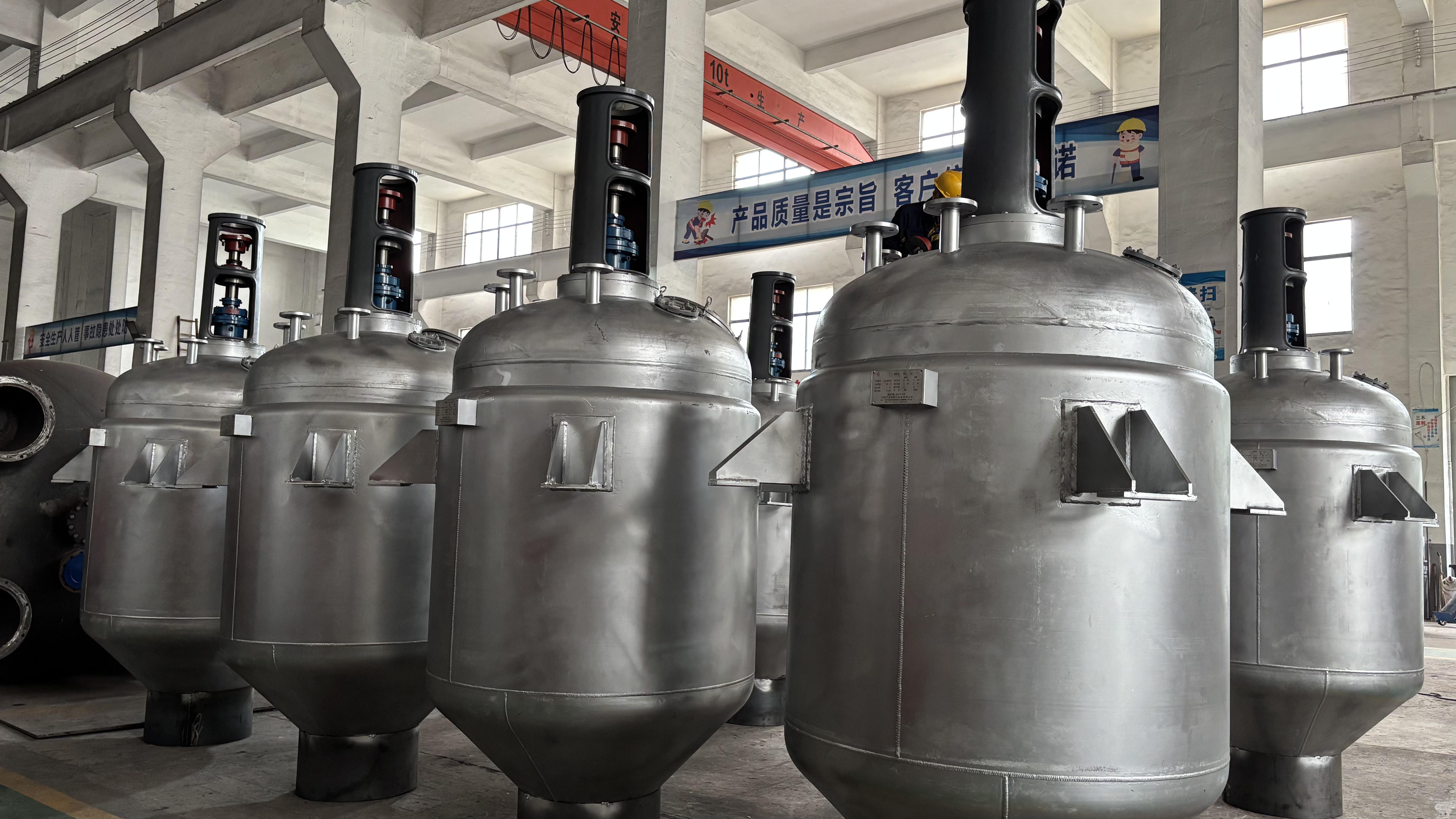
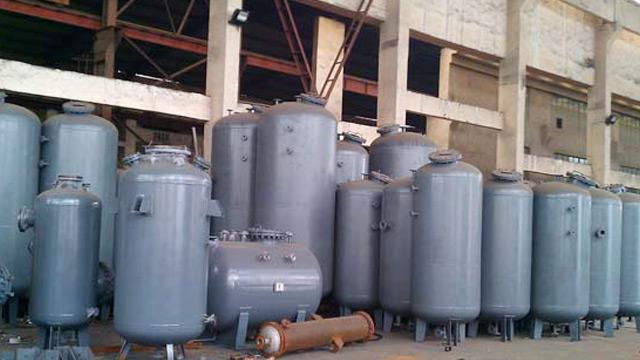
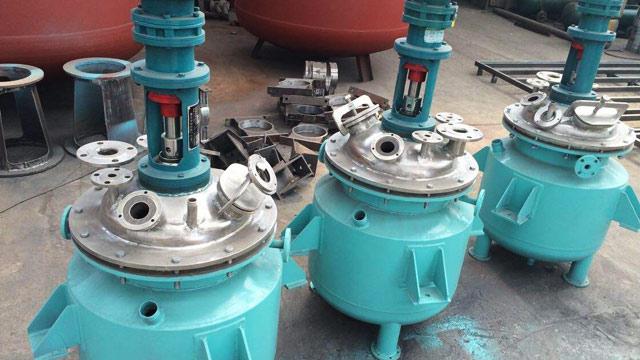
A kettle reactor, also known as a reaction kettle or pot reactor. It is the simplest and most widely used reactor among various types of reactors, widely used in fields such as petroleum, chemical, rubber, pesticides, dyes, and pharmaceuticals. It can be used for homogeneous reactions or non-homogeneous reactions dominated by liquid phase, such as liquid-liquid phase, liquid-solid phase, gas-liquid phase, gas-liquid solid phase, etc.
The kettle reactor has a wide range of applicable temperatures and pressures, strong adaptability, high operational flexibility, easy control of temperature concentration during continuous operation, and uniform product quality. This type of reactor is most commonly used under mild operating conditions, such as atmospheric pressure, low temperature, and below the boiling point of the material. When the reaction conditions are relatively harsh (such as high temperature, high pressure, strong corrosiveness, etc.), a dedicated kettle reactor can also be used for production.
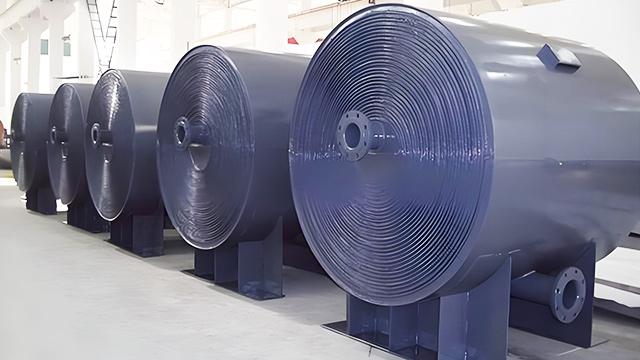
The main structure of a kettle reactor consists of a kettle body, a stirring device, a transmission device, a shaft seal device, and a heat exchange device.
The operation mode of a kettle reactor is divided into
1. Intermittent kettle, also known as intermittent kettle reactor, is characterized by flexible operation and the ability to adapt to different operating conditions and product varieties. It is particularly suitable for the production of small batches, multiple varieties, and products with long reaction times. The disadvantage of intermittent kettles is that they require auxiliary operations such as loading and unloading, and the product quality is not easily stable. However, some reaction processes, such as fermentation and polymerization reactions, still face difficulties in achieving continuous production, and batch reactors are still used for production.
2. Continuous kettle, also known as continuous kettle reactor, is composed of multiple reactors connected in series. Compared with intermittent kettles, continuous kettles can save feeding and unloading time, produce continuously, and have relatively stable product quality. The disadvantage of a continuous kettle is that the stirring effect can easily cause material mixing back, affecting the conversion rate of the product.
3. A semi continuous kettle, also known as a semi continuous kettle reactor, refers to a reactor in which one or more raw materials are added at once, and another or more raw materials are continuously added. Its characteristics are between batch kettles and continuous kettles. According to the different stirring methods, reaction vessels can be divided into vertical container center stirring, eccentric stirring, inclined stirring, horizontal container stirring, etc. Among them, the vertical container center stirring reactor is the most commonly used.
Looking for reliable reaction kettle solutions for your chemical or pharmaceutical project? Contact Wuxi Hongtu today at htyh02@gmail.com for expert technical support and quotes!
2026/03/01
2026/07/01
2026/07/13
2010/11/02
2026/07/01