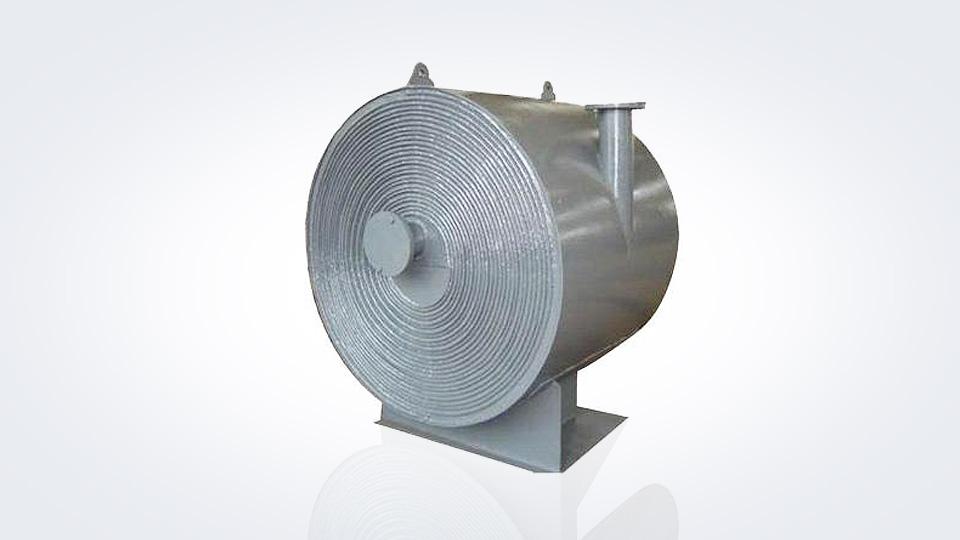
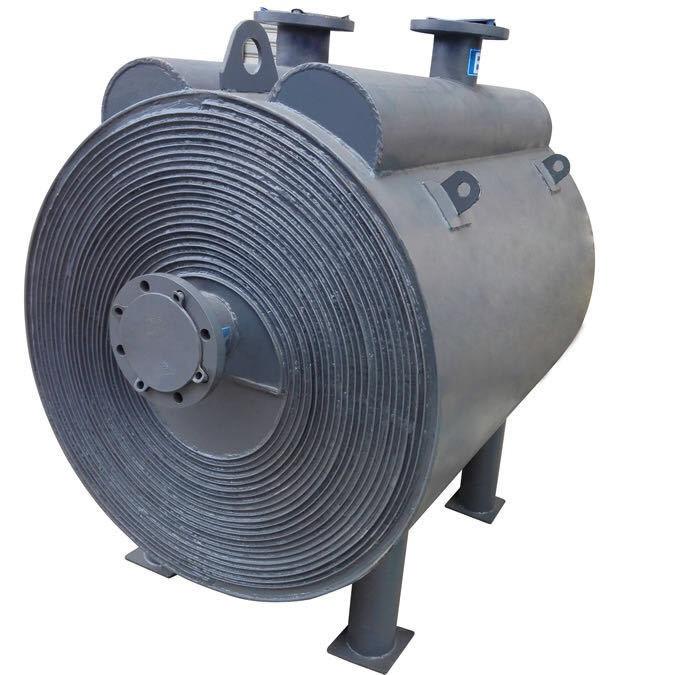
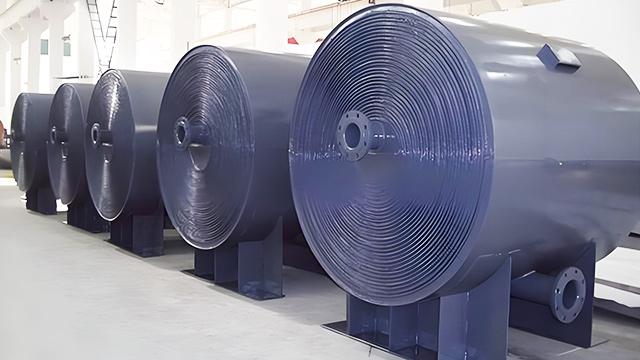
What is a spiral plate heat exchanger? Simply put, it is one of the common types of heat exchangers, which is a type of heat exchanger made by rolling metal plates into two spiral channels and exchanging heat between cold and hot fluids. The advantages are compact structure, small volume, and high heat transfer efficiency, mainly used in industries such as petroleum, chemical, pharmaceutical, machinery, power, and environmental protection that require heat conversion.
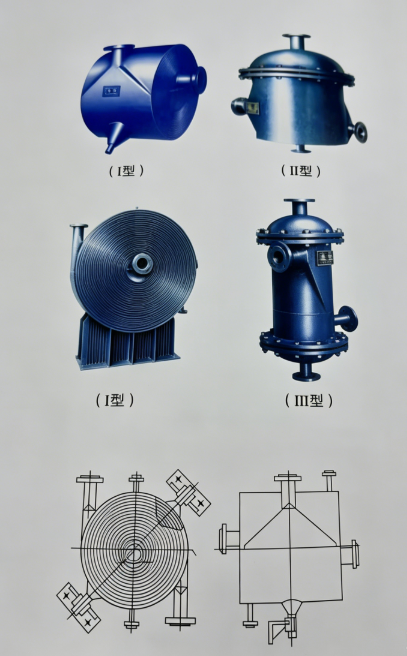
1. Specific types of spiral plate heat exchangers
Spiral plate heat exchangers are generally divided into two types: detachable and non detachable. Among them, the non detachable structure is relatively simple, which means that both ends of the spiral channel are welded together, making it non detachable.
The difference in structure between detachable spiral plate heat exchangers and non detachable ones mainly lies in the fact that the two ends of the spiral channel are sealed structures, rather than welded together. As for the other parts, they are the same. In terms of sealing, a flat cover and gasket are generally used for sealing. In addition, in order to improve the pressure bearing capacity of the spiral plate, fixed distance columns will be used to support between the plates.
2. Structural performance of spiral plate heat exchanger
(1) The two spiral channels of the heat exchanger are made up of two metal plates rolled separately, so the heat transfer medium can flow in full counter current to enhance the heat transfer effect. Even if the temperature difference of the medium is small, it will not affect the heat transfer effect.
(2) The connecting pipes on the shell of the heat exchanger generally adopt a tangential structure, because this can reduce local resistance and increase the flow rate appropriately to enhance the heat transfer capacity of the heat exchanger.
(3) If a single spiral plate heat exchanger cannot meet the usage requirements, multiple units can be used simultaneously. In terms of combination, it can be in series or parallel, but it is important to note that the equipment and channel spacing must be consistent. In addition, it can also be a hybrid combination, that is, one channel in parallel and one channel in series.
3. Process flow of spiral plate heat exchanger
The process flow of spiral plate heat exchanger is also an important aspect, so everyone should take it seriously and not be careless. Specifically, the process is: cutting, splicing - non - destructive testing - flanging, contact welding distance column - surface cleaning - overall assembly - non-destructive testing - rolling - channel shaping, welding channels, assembly - metalworking - assembly - pressure testing - acid pickling and passivation, painting - packaging.
Hongtu Pharmaceutical currently has over 10 engineering and technical personnel, including 3 with intermediate professional titles, covering key areas such as equipment structure design, process optimization, and quality control. Through industry university research collaboration, we have overcome the industry pain points of high energy consumption and low efficiency in traditional equipment.
Backed by 28 years of manufacturing expertise in pharmaceutical and chemical equipment, Hongtu is ready to support your next project. Request a quick quote today.(htyh02@gmail.com)
2026/06/01
2026/07/01
2026/07/01
2026/06/22
2010/11/02